
Liminality
3D first-person dual-world narrative puzzle game

It is a 16-week project in which I served as the sole developer. I conceived of, designed, and built the entire project from the ground up. The game was created in Unreal Engine 5 and features environmental puzzles and narrative exploration; players take on the role of a night watchman who travels between the realm of the living and the underworld. By traversing the two worlds, players can investigate both halves of a village and gather clues from both realms to solve puzzles and uncover the mystery surrounding a disappearance. The game's dual-world visual system and environmental storytelling provide players with an interactive experience that depicts elements of traditional Chinese folk beliefs regarding life and death.
Inspiration
Cultural Roots
Growing up with Chinese folklore, I was always intrigued by how traditional beliefs shape our perception of reality.
This inspired the core mechanic of my game: switching between the Yang world (realm of the living) and the Yin world (realm of the dead). This duality is framed by the Bagua, an ancient cosmic framework governing the transition between these states.
Puzzle as Ritual
Shifting worlds transforms folk rituals into environmental puzzles, allowing players to gather clues and confront deeper evils to uncover a hidden truth.
Dual Worlds Framework
Narrative
Normalcy
Memory Traces
Truth Revealed
Ritual Completion
Suspicious Clues
Evidence of Crimes
Act I: Setup
Act II: Confrontation
Act III: Resolution
Yang World Line
Yin World Line
Core Mechanic
Realm Switching
-
Press X to shift between the living world and underworlds
-
Each location shows two different realities

Dual-World Puzzles

-
Clues are split between both realms
-
Combine information from both sides to solve puzzles
Item Collection
-
Find 3 talismans to break the evil ritual
-
Use keys and passwords to access new areas
-
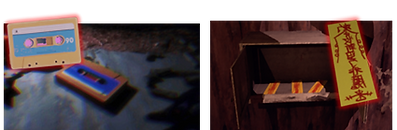
Collect tapes to solve puzzles
Environment Interaction
-
Crawl through tight tunnels
-
Climb walls to reach hidden spaces
-
Move furniture to discover secrets

Game Sequence & Progression

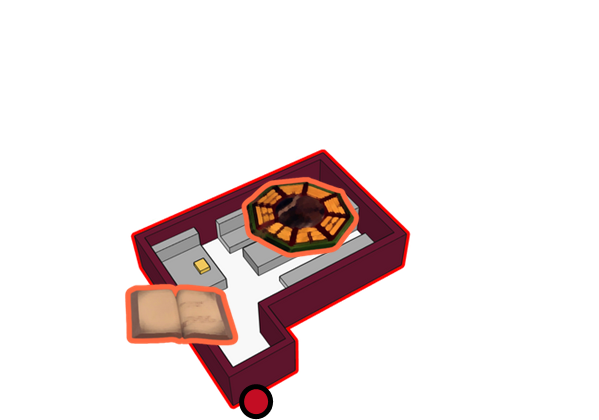
The diagram shows the chief's hidden room with a table (Left) and a coffin (Right), where players switch between living and spirit worlds to discover different clues in each realm.
04

Old Woman’s House
Village Head Main Bedroom
Basement
Hidden Room
Ancestral Altar
01
02
03
05
Hidden Room
-
Obtains crime recordings and final area access
-
Eliminates all doubt about village's guilt
Ancestral Altar
-
Completes ritual with three talismans
-
Achieves emotional closure by reuniting mother and daught
Basement
-
Meets murdered girl's ghost and accepts rescue mission
-
Transforms from search to rescue operation
Village Head Main Bedroom
-
Discovers villager conspiracy and hidden basement
-
Confirms village secrets require investigation
-
Finds missing daughter's diary and gains spirit vision
-
Shifts from routine job to personal mission
Old Woman’s House
Level Design
LEVEL 1
The house of the Old Woman
Unlocks realm-switching mechanic
Establishes emotional core and narrative premise. Natural story introduction
Start
LEVEL 2
The house of Village Head
Unlocks realm-switching mechanic
TV:News Broadcast.
Telephone: Living World - villager's warning;
Underworld - girl spirit's curses
Stores password for refrigerator hidden door
Four tapes hidden across two tunnels (2 per realm)
First of three required talismans
Provides Misson - collect three talismans
Plays different audio based on tapes collect in different realm


Conceals entrance to basement
Start
End

Living World - hiding spot for second talisman;
Underworld - atmospheric horror element
One key in each realm required for final cabinet
Contains third talisman
behind dual-key lock
Development Process
 |  |  |  |
|---|---|---|---|
 |
Lighting
-
Crafted ambient lighting to enhance the overall atmosphere.
-
Implemented focused lighting on interactive points to intuitively guide the player's attention.
Sound
-
Established an audio landscape of terrifying silence to build tension.
-
Utilized directional and proximity-based sound cues to subconsciously guide the player's navigation.
Filters
-
Employed distinct color filters to visually differentiate the realms of the Yin & Yang world.
-
Applied an oil painting filter to the entire scene, heightening the sense of mystery and artistic style.
Modeling
-
Created key interactive props, including movable planks and a refrigerator with a critical hole.
Clue Design
-
Create key narrative assets: custom newspapers, diaries, and televised news reports.
Auto Door System

The door opens automatically when the player approaches it.
Mouse Hover Highlight System

Interactable objects are automatically highlighted when hovers the mouse over them.
Interactive Object System
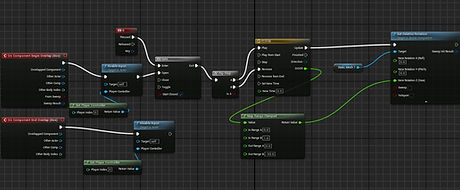
The player can press [G] to move objects, such as planks and coffin lids.
Climbing System


The player can press [E] to climb upwards, used in the final level to ascend into the Ancestral Altar on the second floor.
Crouch & Crawl System

The player can press [Z] to crawl, used for navigating basement and pipe areas.